
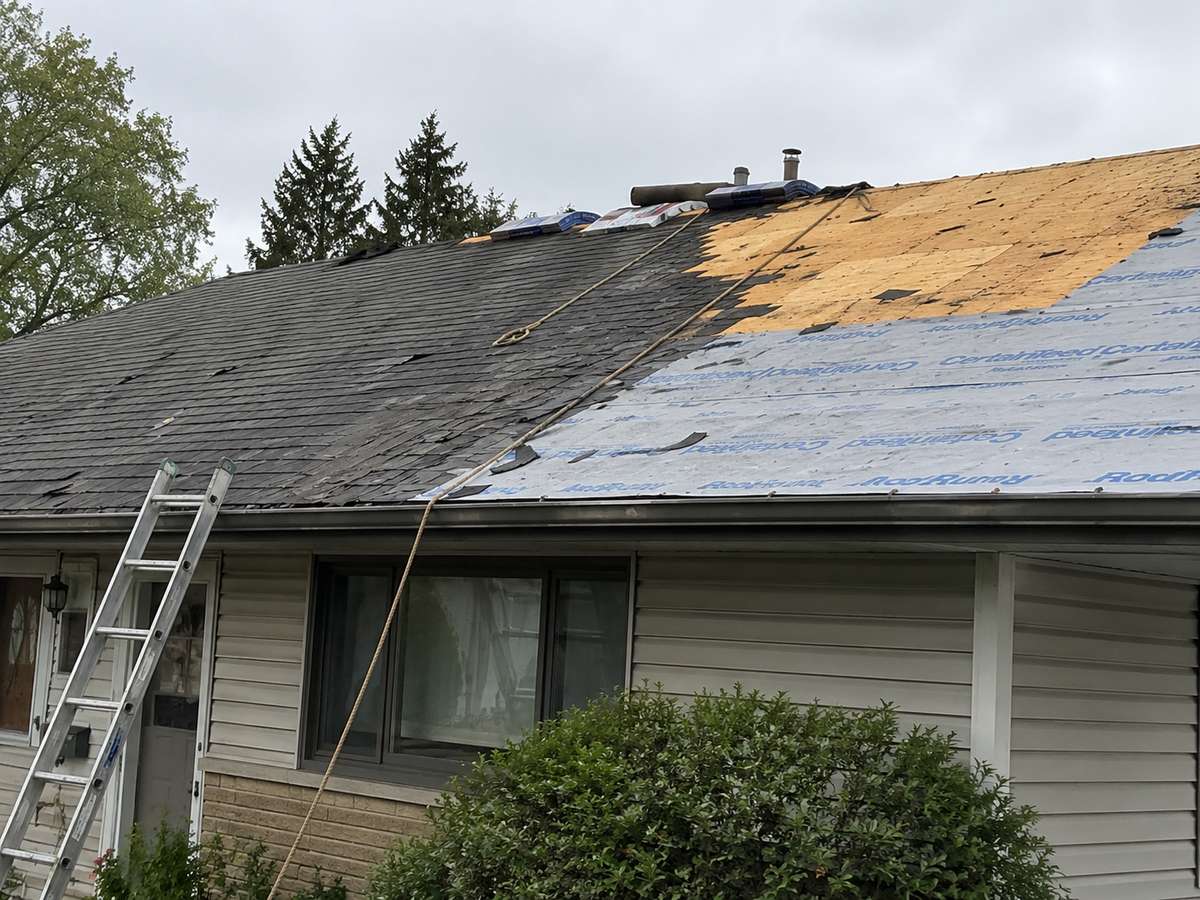
- 6 of the 11 cities and villages we work in require a permit for a routine, same-material re-roof; the other 5 do not.
- Waukesha, Brookfield, Whitefish Bay, Shorewood, Cedarburg, and Port Washington require a permit regardless of material, with no same-material exemption.
- A property in one of Waukesha's nine historic districts or one of Cedarburg's historic districts needs additional Landmarks Commission review before a permit is issued.
- Wisconsin caps re-roofing at two layers of shingles statewide, and whoever pulls the permit must hold Dwelling Contractor and Dwelling Contractor Qualifier certification (SPS 305.31).
Move a few miles in the Milwaukee metro and the permit rule for the exact same roofing project can change. A full re-roof that needs nothing more than a phone call in Wauwatosa requires an actual permit in Waukesha. A homeowner in a Waukesha historic district can be looking at weeks of review before a shingle color is even approved. Assuming your neighbor’s rule applies to your address is how a project ends up delayed.
There is no single “Milwaukee roofing permit rule.” Each municipality sets its own, and they genuinely differ. Here is what actually applies in the eleven cities and villages we work in most.
Permit Requirements by City
| City | Same-material re-roof | What triggers a permit |
|---|---|---|
| Milwaukee | Generally no permit | A full re-roof does require a City of Milwaukee permit |
| Wauwatosa | No permit | Changing the material style (e.g. shingles to metal); a style-changing material may also need Design Review Board approval |
| West Allis | No permit | Replacing structural roof members, or changing the roof structure (flat to pitched, adding a dormer) |
| Waukesha | Permit generally required, including standard tear-off and replacement | Applies even to a routine same-material re-roof |
| Mequon | No permit | Structural changes; installing more than two shingle layers requires structural calculations |
| Whitefish Bay | Permit generally required | Applies to roofing replacement, new installation, and tear-offs regardless of material |
| Shorewood | Permit generally required | Re-roofing is listed directly among the village’s standard permitted projects |
| Cedarburg | Permit generally required | Applies to standard re-roofing; a historic district property also needs Landmarks Commission review |
| Port Washington | Permit generally required | Roofing falls under the city’s general building permit requirement |
| Brookfield | Permit generally required | Applies to every re-roofing project, with pre- and post-work inspections |
| Menomonee Falls | No permit | Re-shingling without new plywood decking; a full replacement or new decking does require one |
Waukesha used to be the clear outlier on this list. It no longer is. Of the eleven municipalities we have researched in detail, five (Whitefish Bay, Shorewood, Cedarburg, Port Washington, and Brookfield, along with Waukesha itself) require a permit for a standard, same-material re-roof. The other five (Milwaukee, Wauwatosa, West Allis, Mequon, and Menomonee Falls) treat it as maintenance that does not need one. There is no regional default to assume either way.
Milwaukee
Straightforward repairs using the same roofing material generally do not require a permit in the City of Milwaukee. A full re-roof does. When a permit is needed, pulling it is part of a properly scoped roofing project rather than something a homeowner should have to sort out separately.
Wauwatosa
Wauwatosa treats re-roofing as maintenance when the replacement material matches what was there, such as asphalt shingles replaced with asphalt shingles. No permit is required in that case. A permit is required when the material changes, for example installing a metal roof over a home that had asphalt shingles, and if that change would alter the home’s architectural style, it also needs approval from Wauwatosa’s Design Review Board.
One detail worth knowing before a project starts: Wauwatosa does not approve roll roofing, which is a common low-cost material on low-slope sections like porch roofs and rear additions. If a previous repair used it, that is worth addressing during a replacement rather than repeating it.
West Allis
West Allis generally does not require a permit for a standard re-roof. A permit becomes necessary when structural roof members are being replaced, or when the project changes the roof’s structure entirely, such as converting a flat roof to a pitched one or adding a dormer.
Two West Allis-specific rules are easy to miss. Homes are limited to two layers of roofing material; if two layers are already present, both have to come off before new material goes on. And attic ventilation cannot be reduced as part of a re-roofing project, which matters on a city with a lot of older bungalow and duplex housing stock where ventilation is already marginal.
Waukesha
Waukesha is the city where the rule most homeowners assume (no permit for a routine re-roof) does not hold. Waukesha generally requires a building permit for a full re-roof, including a standard tear-off and shingle replacement, where Milwaukee, Wauwatosa, and West Allis would not.
For an owner-occupied one- or two-family home, Wisconsin’s Uniform Dwelling Code allows the homeowner to pull that permit directly rather than requiring a contractor to do it.
If the property sits in one of Waukesha’s nine local historic districts (Block C Downtown, Caples Park, College Avenue, East Broadway, Five Points Downtown, Laflin Avenue, Madison Street, McCall Street, or Wisconsin Avenue) or is an individually designated Local Landmark, there is an additional step: a Certificate of Appropriateness from the Landmarks Commission before most exterior work, roofing included. The commission meets the first Wednesday of each month, and applications are due two weeks before the meeting. Depending on timing, that can mean four to six weeks between deciding to do the work and being cleared to start it. Reviews have specifically scrutinized shingle color and shadow line for compatibility with a building’s historic character, so this is worth planning around, not discovering midway through a project.
Mequon
Mequon does not require a roofing permit for a standard re-roof unless structural changes are involved, in which case additional review applies. One rule worth knowing before a replacement is planned: installing more than two layers of shingles requires structural calculations, which is a real design step, not paperwork. Mequon follows Wisconsin’s Uniform Dwelling Code process, administered through the state Department of Safety and Professional Services.
Whitefish Bay
Whitefish Bay does not carve out an exception for a same-material re-roof the way Milwaukee, Wauwatosa, or West Allis do. The village’s permit list covers roofing replacement, new installation, and tear-offs for both residential and commercial properties, and a Building Permit Application is required before work starts, regardless of whether the new material matches what was there before.
Shorewood
Shorewood lists re-roofing directly among its standard permitted projects, alongside siding and window replacement, with no same-material exemption. The Village of Shorewood’s Planning and Development Department handles permit administration, and confirming the current requirement with them is part of scoping a job here.
Cedarburg
Cedarburg requires a standard building permit for re-roofing under its general “Do I Need a Permit” guidance. Properties inside one of the city’s historic districts, including the Washington Avenue and Columbia Historic Districts, face an additional step: any permit application involving a designated landmark or a historic district property has to be filed with the Landmarks Commission before work can proceed. That review applies on top of the standard permit, not instead of it.
Port Washington
Port Washington requires a building permit before any structure is erected, structurally altered, or relocated, issued through the city’s Building Inspection Department. Roofing work falls under that same general permitting requirement. The city’s building permit process does not publish a specific same-material exemption the way some neighboring municipalities do, so confirming the current requirement for a specific address before scoping a job matters here more than most.
Brookfield
Brookfield is the strictest municipality on this list after Waukesha. A Residential Building Permit is required for every re-roofing project in the city, with no exemption for matching the existing material. Re-roofing permits here also require both a pre-work inspection confirming the decking is sound and a post-work inspection covering nailing, flashing, ventilation, and material compliance. Commercial and multi-family re-roofing permits go through a separate online Commercial Building Permit process.
Menomonee Falls
Menomonee Falls follows the no-permit pattern for a simple re-shingle, the same as Milwaukee, Wauwatosa, and West Allis. Re-shingling that does not involve new plywood decking does not require a permit. A full roof replacement, or any roofing work involving new decking, does, filed through the Village’s Building Department.
The One Rule That Applies Everywhere
Regardless of city, Wisconsin’s contractor licensing requirement doesn’t change. Whenever a building permit for a one- or two-family dwelling is required, the person obtaining it generally must hold a Dwelling Contractor or Dwelling Contractor Restricted certification, and must hold or employ someone with a Dwelling Contractor Qualifier certification (SPS 305.31). That applies the same way across every city and village on this list.
What This Means Before You Schedule a Roofing Project
The practical takeaway is simple: confirm your specific city’s rule before assuming a quote or timeline, especially if your project involves a material change, a structural change, more than two existing layers, or a property in one of Waukesha’s or Cedarburg’s historic districts. A repair that is a same-day job in Wauwatosa can have a multi-week review attached to it a few miles away in Waukesha, Brookfield, or Whitefish Bay.
Milwaukee Roof Contractors works across Milwaukee, Wauwatosa, West Allis, Waukesha, Mequon, Whitefish Bay, Shorewood, Cedarburg, Port Washington, Brookfield, and Menomonee Falls, and confirming the current permit requirement for your specific address and scope of work is part of scoping any roof repair or roof replacement we quote, not an extra step left for the homeowner to handle. If you are planning a project and want to know what actually applies at your address, contact us before you schedule anything.