
Emergency Roof Repair in Milwaukee Metro
A roof that's actively leaking or missing a section after a storm needs a fast response, not a scheduled appointment next week. We prioritize active emergencies and use professional tarping to stop water intrusion until permanent repair is possible.
(414) 367-9464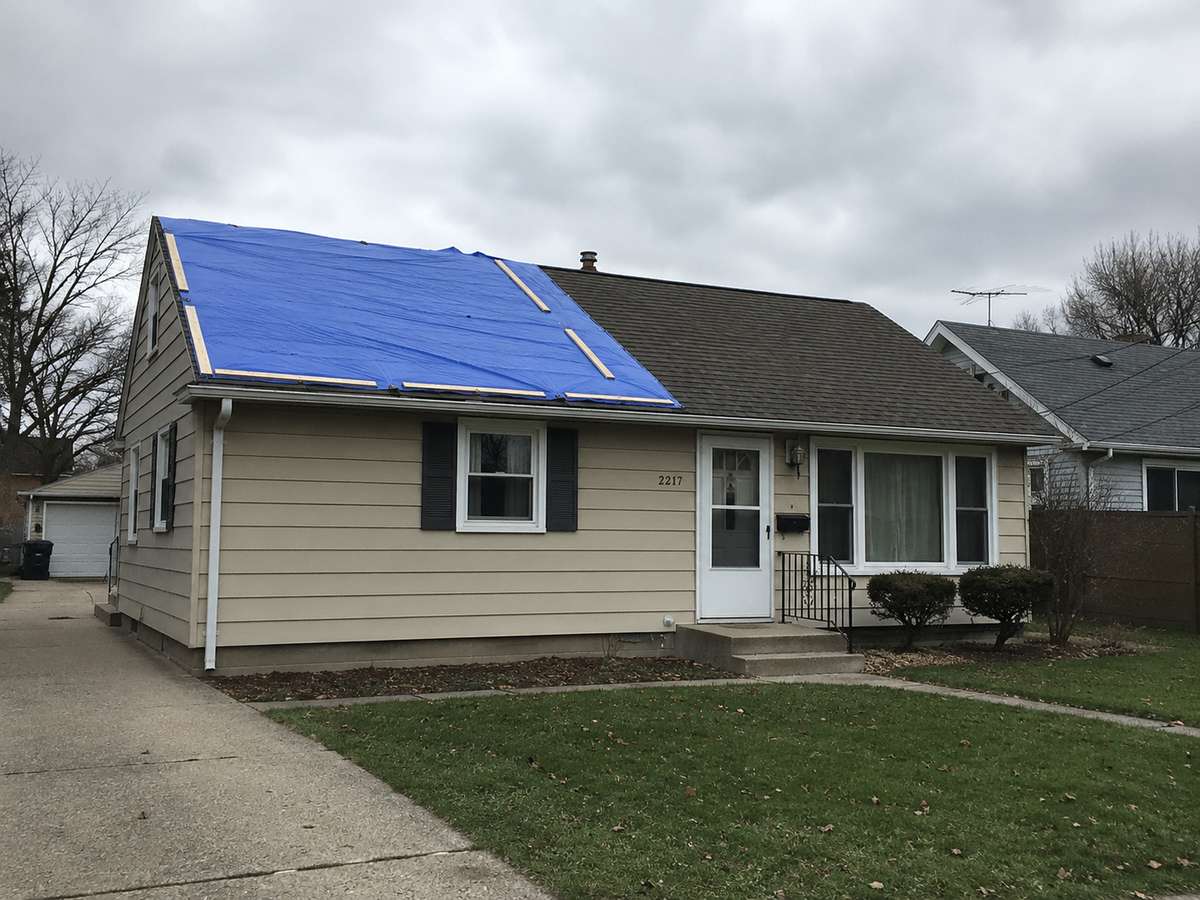
Is This Actually a Roofing Emergency?
Treat it as an emergency if:
- Water is actively leaking into the home
- A storm has torn away a section and exposed the roof deck
- A fallen tree or large branch has damaged the roof
- A large section of shingles has lifted or torn off in high wind
Routine wear that isn't actively letting water in gets scheduled as a standard repair instead.
The difference is simple. If the roof is open to additional water intrusion right now, it needs to be stabilized quickly.
What Should You Do Right Away If Your Roof Is Leaking?
Start by protecting the inside of the home.
Place a bucket or container to catch water. Move furniture and valuables out of the affected area. Take photos of the damage before any cleanup. Then call.
The immediate goal is not to complete the permanent repair on the spot. It is to limit additional water intrusion, document what happened, and stabilize the damaged area until the full repair can be completed.
How Does Emergency Roof Tarping Work?
We secure a heavy-duty tarp over the damaged area and anchor it properly so it holds through the next round of wind, not just until the truck leaves. Emergency tarping is used to stop water intrusion when the roof cannot be permanently repaired immediately.
What a Roof Tarp Does
A properly secured tarp temporarily covers the damaged section so water is not continuing to enter through the exposed area. That buys time while the permanent repair is being scheduled.
What a Roof Tarp Doesn't Do
A tarp is not a permanent roof repair. We are upfront about that distinction when we're on site. Once the roof is stabilized, the damaged roofing still needs to be repaired rather than treated as finished work.
What Happens With Insurance After Storm Damage?
Documentation starts immediately. We photograph the damage before and after tarping, which gives you documentation you can use to support your claim either way.
There is also a real filing deadline to keep in mind. Wisconsin gives you one year from the date of loss to file, and simply going back and forth with an adjuster does not stop that clock from running (Wis. Stat. § 631.83). That is why documenting everything right away matters.
Photos taken during the emergency response can show:
- The condition of the roof before temporary stabilization
- The damaged area that required tarping
- The roof after the temporary protection was installed
How Fast Can Emergency Roof Repair Happen?
Active leaks and storm damage calls get priority over standard scheduling. Response times vary with storm volume, so call for the current response time rather than assuming a normal repair schedule applies.
The first visit may focus on stopping the immediate water intrusion rather than completing the permanent repair. If the roof needs tarping first, that temporary stabilization gives us time to move to the next step without leaving the damaged area exposed.
What Happens After the Emergency Tarp Is Installed?
A tarp buys time. It does not replace a real repair. Once the damaged section is protected, we follow up to schedule the permanent fix after materials and, where relevant, insurance approval are in place.
The tarp should not be treated as a long-term roofing solution. Sun and wind degrade it the longer it remains in place, which is why the permanent repair should move forward as soon as conditions and materials allow.
Getting From Emergency Response to Permanent Repair
Once the immediate situation is under control, the next step is identifying what needs permanent repair and getting that work scheduled:
- Stop the immediate water intrusion
- Document the damage
- Temporarily stabilize the roof if needed
- Schedule the permanent repair
Related reading: What to Do Immediately After Storm Damage to Your Roof
Schedule Emergency Roof Repair
Call our local team for a free consultation.
Emergency Roof Repair Questions, Answered
How fast can you respond to an emergency call?
Active leaks and storm damage calls get priority over standard scheduling. Call for current response times, which vary with storm volume.
Is emergency tarping covered by insurance?
Often yes, as a reasonable measure to prevent further damage, but coverage depends on your specific policy. We provide documentation you can submit either way.
What should I do right now if my roof is actively leaking?
Place a bucket or container to catch water, move furniture and valuables out of the affected area, and take photos of the damage before any cleanup. Then call.
How long can a tarp safely protect my roof?
It's meant to be temporary. Tarps degrade under UV exposure and wind, so we recommend scheduling the permanent repair as soon as conditions and materials allow rather than leaving a tarp up for an extended stretch.
What counts as an emergency roof repair?
An active interior leak, a storm-torn section exposing the roof deck, damage from a fallen tree or large branch, or a large section of shingles lifted or torn off in high wind all count as emergencies in our scheduling. Routine wear that isn't actively letting water in gets scheduled as a standard repair instead.
Does emergency tarping permanently fix a roof leak?
No. Emergency tarping is a temporary measure used to stop water intrusion until the permanent repair can be completed.
Should I take photos before emergency roof repairs begin?
Yes. Take photos of the damage before cleanup if you can. We also photograph the roof damage before and after tarping so you have documentation you can use to support an insurance claim.