
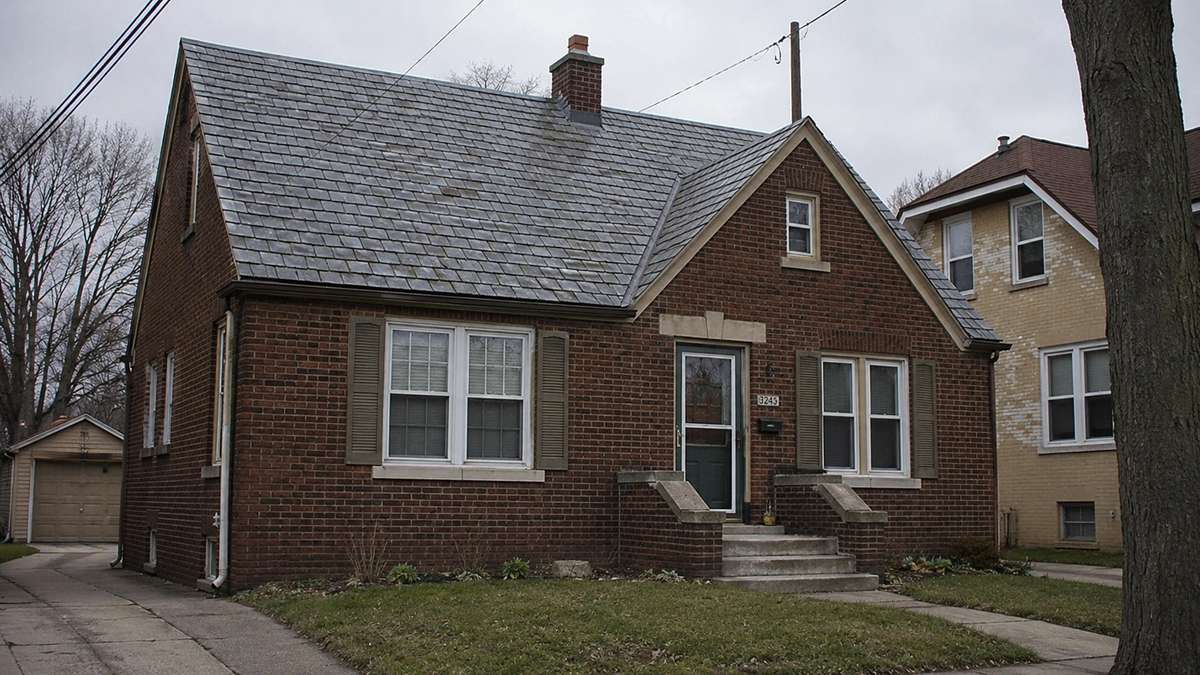
- A properly maintained slate roof can last 75 to 100 years or more, far longer than the components around it, so flashing and fasteners usually fail long before the slate itself does.
- A typical slate repair starts around $500, a fraction of the $25,000 to $60,000+ cost of full replacement, which is why the National Park Service recommends repairing historic slate rather than replacing it when feasible.
- Slate became especially common on homes in architectural styles like Queen Anne, Tudor, Gothic Revival, and Second Empire, so replacing it with asphalt can change the character of the house, not just the roof.
- Walking on slate the wrong way can crack it. Anyone accessing the roof for chimney, gutter, or satellite work should be told it's slate before they start.
If you own an older home in Milwaukee, particularly on the East Side or in one of the area’s historic neighborhoods, there is a chance the slate on your roof has been there longer than you have. A properly maintained slate roof can last 75 to 100 years or more, dramatically longer than the 20 to 30 years you would normally expect from asphalt shingles.
That longevity changes how you should think about problems with a slate roof. A few broken pieces or a leak around a chimney do not necessarily mean the entire roof has reached the end of its life. In fact, replacing a repairable slate roof with asphalt can mean removing a roofing material capable of lasting for generations because one much smaller component failed. The National Park Service specifically recommends repairing historic slate roofs rather than replacing them whenever the existing slate can reasonably be preserved.
How Long Does a Slate Roof Last?
A slate roof can typically last 75 to 100 years or more.
Some slate lasts considerably longer depending on the stone itself, installation, roof design, climate, and maintenance. The National Park Service describes slate as one of the most durable roofing materials available and notes that properly installed roofs can remain serviceable for generations.
That does not mean every component of a slate roof lasts as long as the stone.
A slate roof is a system that includes:
- Individual slate tiles
- Fasteners holding the slate
- Flashing
- Valleys
- Gutters
- Chimney details
- Roof decking
- Underlayment
- Other penetrations and transitions
The slate itself may still have decades of usable life while a piece of flashing around the chimney has failed.
That distinction is one of the most important things a slate-roof homeowner can understand.
The 5 Things That Commonly Go Wrong With Slate Roofs
1. Individual Slate Tiles Break or Slip
One broken slate is not a failed roof.
Slate can crack from falling branches, hail, foot traffic, previous repair work, or other physical impacts. Individual pieces can also become loose or slip out of position.
From the ground, you might notice:
- One slate missing
- A slate sitting crooked compared with the others
- A broken corner
- Pieces of slate on the ground
- A small opening where a slate used to be
These are reasons to have the roof repaired, not automatic reasons to replace it. The National Roofing Contractors Association recommends repairing cracked, broken, or missing slate components to maintain the roof’s ability to shed water.
A typical slate repair commonly starts around $500 or more, depending on where the damage is located, how accessible the roof is, and how much specialized work is required.
That is more expensive than patching a few asphalt shingles, but it is still a very different expense from replacing an entire slate roof.
2. Flashing Fails Before the Slate Does
This is one of the easiest ways to misdiagnose an old slate roof.
You have a 90-year-old roof.
Water appears near the chimney.
The immediate conclusion is, “The roof is 90 years old. I guess it finally needs to be replaced.”
Maybe not.
The slate could still be perfectly serviceable while the metal flashing around the chimney has deteriorated.
The same thing can happen around:
- Roof valleys
- Dormers
- Plumbing vents
- Skylights
- Roof-to-wall intersections
- Other penetrations
Because slate itself can last so long, the durability of the flashing becomes especially important. The National Park Service notes that using durable flashing materials and high-quality workmanship makes particular sense on slate because the roofing material itself has such a long service life.
A roof that may have another 30 years of usable slate should not necessarily be removed because one shorter-lived component needs replacement.
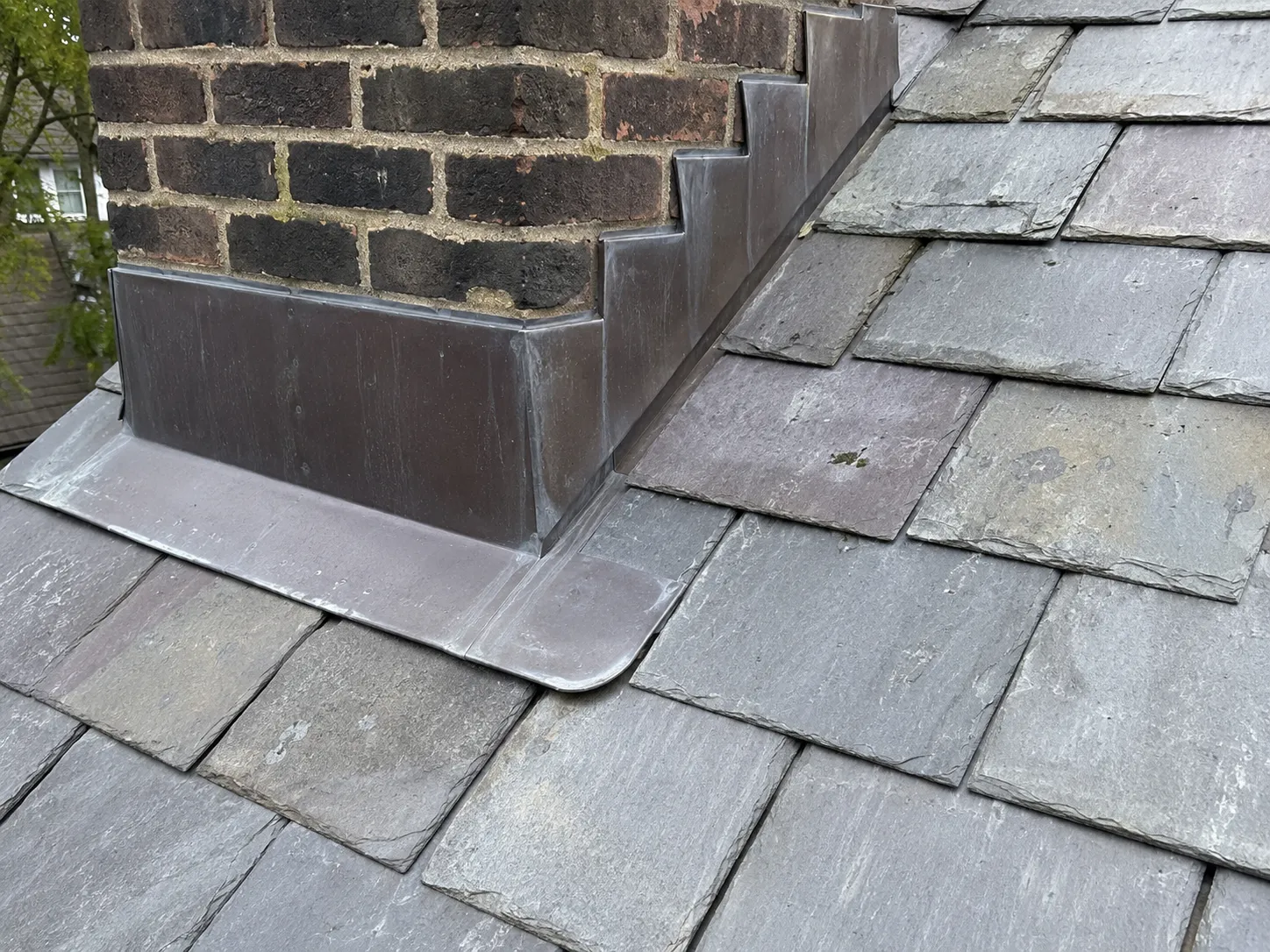 On a slate roof, flashing around chimneys and valleys often wears out long before the slate itself does.
3. Someone Walks on the Roof Who Shouldn’t
Slate is durable as roofing material, but that does not mean you should treat it like an asphalt roof.
Individual slate pieces can crack when improperly walked on.
That makes seemingly unrelated work around the house important.
A chimney contractor, gutter installer, satellite technician, painter, or general handyman who walks directly across a slate roof without understanding how to work around the material can potentially create damage that was not there before.
If your house has slate, tell anyone working around the roof before they begin.
And do not climb up to inspect it yourself.
From a homeowner’s perspective, one of the advantages of a professional roof inspection is getting the condition evaluated without creating new damage while trying to find the old damage.
4. Repairs Are Made With the Wrong Materials or Methods
Slate roofing is not asphalt roofing with stone shingles.
The material is different, the attachment methods are different, and the repair techniques are different.
That matters when someone proposes a quick fix.
A roof that has survived most of a century deserves more than roofing cement smeared around a loose slate.
Poor repairs can:
- Make future slate replacement more difficult
- Trap water in the wrong places
- Damage surrounding slate
- Create an obvious visual mismatch
- Fail long before the original roofing material
The National Park Service cautions that historic slate roofs are often replaced unnecessarily and emphasizes appropriate repair techniques and durable materials instead.
If you own a slate roof, the contractor’s experience with slate specifically matters.
5. The Roof Is Replaced Before Anyone Determines What Actually Failed
This is the expensive one.
If an asphalt roof is 28 years old, badly deteriorated across multiple slopes, and leaking in several places, replacement is not a surprising recommendation.
Slate requires a different calculation.
A 75-year-old slate roof is old by normal roofing standards but may not necessarily be old by slate standards.
Before replacing it, you want to know:
Is the slate itself deteriorating?
Is the damage widespread or concentrated in a few areas?
Are individual slates failing, or is the problem flashing?
Can replacement slate be matched and installed where needed?
What condition is the roof deck in?
How much of the existing roof can realistically be preserved?
If most of the slate remains sound, targeted roof repair can preserve an extremely durable roofing system rather than starting over.
How Do You Know if Slate Is Still Good?
Slate does eventually deteriorate, but assessing it is different from looking at an asphalt roof.
You are trying to determine whether deterioration is isolated or happening throughout the roofing material.
Look for Widespread Breakage
A few damaged pieces can usually be approached as individual repairs.
Repeated broken, cracked, flaking, or missing slate across large portions of the roof points toward a broader problem.
Look at the Pattern of Repairs
An old roof that needs one repair every several years is very different from one requiring repeated work in new locations every season.
If repairs are becoming constant and widespread, the economics start changing.
Look at More Than the Slate
A good assessment should also consider valleys, flashing, fasteners, roof decking, penetrations, and other components.
A leak does not tell you which one failed.
Consider the Slate Itself
Slate is natural stone, and not every slate has identical characteristics or longevity.
The National Park Service notes that roofing slate varies by source and composition. Slate’s very low water absorption also contributes to its ability to withstand frost conditions, one reason it has historically worked well as a durable roofing material.
An experienced slate roofer should evaluate what is actually on your house rather than assuming that all old slate should be treated the same way.
One More Milwaukee Factor: These Roofs Are Part of the House
Slate is particularly relevant in Milwaukee because it appears on some of the city’s older residential architecture, especially on the East Side.
On those homes, the roof may be much more than a waterproof covering.
The color, texture, size, pattern, and shape of the slate can be an important part of the way the house was designed to look.
Slate became especially prominent in American architecture during the late nineteenth and early twentieth centuries and was frequently used on styles with visible, steep, and complicated rooflines. The National Park Service specifically identifies slate with architecture such as Queen Anne, Tudor, Gothic Revival, and Second Empire designs.
That matters when someone proposes replacing original slate with ordinary asphalt shingles.
The new roof may keep water out, but it can substantially change the appearance of the house.
On a house where the existing slate remains repairable, preserving it can therefore accomplish two things at once. You retain a roofing material with exceptional longevity and preserve an architectural feature that would be difficult to recreate cheaply.
That does not mean slate must be saved at any cost.
It means replacement should be a deliberate decision, not the default recommendation simply because the roof is old.
When Does a Slate Roof Actually Need Replacement?
There eventually comes a point when repairing individual pieces no longer makes economic sense.
Replacement becomes more reasonable when:
- Slate deterioration is widespread
- Large numbers of tiles are failing
- The roof requires continual repairs in different locations
- Major sections can no longer be reliably maintained
- The underlying roofing structure requires extensive work
- Previous improper repairs have severely compromised the system
- The cost of repeatedly maintaining the existing roof no longer makes sense
At that point, replacement can be substantial.
Premium roofing materials such as slate and cedar can put a roof replacement in the $25,000 to $60,000+ range depending on the size, material, complexity, and scope of the project.
That number is another reason you should be confident replacement is actually necessary before removing a slate roof. The National Park Service recommends preservation and repair when feasible, specifically because historic slate roofs are sometimes removed when they could have remained serviceable.
What if Only Part of the Slate Roof Is Damaged by a Storm?
Storm damage should be evaluated separately from normal aging.
Hail, high wind, and falling tree limbs can crack or dislodge slate even when the surrounding roof remains in good condition.
Milwaukee’s mature trees add another potential hazard. The region has lost a large share of its ash canopy to Emerald Ash Borer over the past decade, leaving dead and declining limbs as an ongoing roof-damage risk.
After a storm, look from the ground for:
- Missing slate
- Fresh pieces of slate on the lawn
- Fallen branches
- Damaged gutters
- New interior water staining
- Obvious impact areas
Do not climb onto the roof yourself looking for hail marks.
If the damage resulted from a sudden covered event rather than normal deterioration, homeowners insurance may become relevant. Coverage depends on your policy and the cause and scope of damage, not simply the age of the slate.
For more detail, see what homeowners insurance covers for roof damage in Wisconsin.
Can You Replace a Slate Roof With Asphalt Shingles?
Yes. A homeowner can choose to replace slate with another suitable roofing material when a complete replacement is necessary.
The better question is whether you should.
Asphalt has an obvious financial advantage. A typical asphalt roof replacement runs about $8,500 to $18,000, compared with $25,000 to $60,000+ for premium roofing materials.
But you are also comparing a roofing material with a typical 20 to 30 year lifespan against slate that can last 75 to 100 years or more.
There is also an architectural tradeoff.
On an older Milwaukee home designed around a slate roof, changing materials can noticeably alter the character of the house.
If the existing slate is genuinely beyond repair and natural slate replacement is outside the budget, alternatives may be worth evaluating. But that decision should happen after determining whether the current slate truly needs to come off.
Questions to Ask Before Hiring Someone to Work on Slate
Slate work is specialized enough that asking a few direct questions is worthwhile.
Do you actually repair slate roofs? Not simply, “Do you do roofing?”
Can individual slate pieces be replaced without disturbing a large section?
What do you think is actually causing the leak?
Is the slate itself failing, or are the flashing and other components the problem?
How will you access the damaged area without breaking surrounding slate?
Can you match the existing slate reasonably well?
If you recommend replacement, why can’t the existing roof be repaired?
A contractor should be able to explain the condition of the roof in terms you understand.
“Your roof is old” is not much of a slate diagnosis.
With Slate, Old Does Not Automatically Mean Worn Out
If there is one thing to remember about owning a slate roof in Milwaukee, it is this:
Do not judge it by asphalt-roof standards.
A 25-year-old asphalt roof may reasonably be approaching replacement.
A slate roof several times that age may still have significant usable life.
When a problem appears, determine what actually failed. Sometimes it is an individual piece of slate. Sometimes it is flashing. Sometimes storm damage has affected one section. And sometimes the slate itself really has reached the point where replacement is justified.
The expensive mistake is skipping that diagnosis and removing an otherwise serviceable roof simply because the date on the house makes it sound old.
Slate earned its place on Milwaukee’s older homes because it can last for generations. If yours is still sound, maintaining it may be the most sensible roofing decision you can make.
Milwaukee Roof Contractors provides roof inspection, roof repair, roof replacement, emergency roof repair, and storm damage services throughout Milwaukee, Waukesha, and Ozaukee Counties, including Wauwatosa, West Allis, Mequon, Whitefish Bay, Glendale, Shorewood, Menomonee Falls, Cedarburg, Grafton, Brookfield, New Berlin, and surrounding communities. If you own a slate roof and are seeing broken slate, leaks, storm damage, or signs of deterioration, contact us to have the roof evaluated before assuming it needs to be replaced.